Thursday, May 24, 2012

On Jameson Fitzpatrick, Eduardo C. Corral, Alex Dimitrov, and the Lambda Literary Review

In a creepy faux analysis of Anne Sexton, Jameson Fitzpatrick's article entitled "Anne Sexton, Aesthetics, and the Economy of Beauty" deflects larger issues of race and power in the gay male community in favor of decontextualizing the published words of poet, Eduardo C. Corral, for more questionable ends.  I hope that the Lambda Literary review offers a corrective to an article that could be seen as a (clumsy) racialized attack against Corral.

It must be noted that you feel Fitzpatrick's eager desire to ditch talking about Anne Sexton, his "favorite" poet, and discuss about what he sees as larger issues (ie Eduardo C. Corral).  In fact, the entire article acts as a vehicle to express his self-confessed fear that the poetry world may be ruined by talking about appearance and by extension whiteness.   He uses the typical codified language to make the issue of race completely present and invisible at the same time: "beauty," "style," "substance," among other things.  Whether or not Fitzpatrick believes Corral's book Slow Lightning is "bold and imaginative" (which he tellingly puts in parenthesis) is insignificant.  But it is amusing that he conflates Sexton with Dimitrov: "...her gift as a writer remains singular and irrefutable.  Likewise, Dimitrov (his attractiveness aside), writes tight, honest poems...Dimitrov is writing some of the most exciting poems today."  It's comforting to know that "poetry's next great gay hope" (as stated by Out magazine) is already canonized without even having published a book.  But a poet, the first Latino who has won the Yale Younger Poet Prize, according to Fitzpatrick, is doing an admirable job, which receives a quick gloss.

What's predictable is that the way the article is structured.  Fitzpatrick's closing argument is that Dimitrov's poems are "some of the most exciting poetry today."  And we also have to receive this final imperative: "That he is young and pretty shouldn't count against him."

Who is attacking Dimitrov's beauty?  Who even named Dimitrov in print?  Certainly it wasn't Corral: there's no mention specifically of Dimitrov in the interview that launched this attack.

Here's Corral's words in the Plougshares interview:

"The queer poetry community in New York City is full of beautiful people, which makes me an outsider…I’m disappointed in many of my queer peers. So many of them want to be part of the hipster crowd. So many of them value looks over talent. The cool kids form clubs, become gatekeepers. So many of my peers are clamoring to be let in."

Although never explicitly named, Corral may be talking about more than "weight" (as he does name in the Ploughshares interview) and "cool"-ness.   He's referring to the whiteness of the poetry scene.  He has mentioned in a variety of interviews about the marginalization of Latino poets in the white publishing world.  There's no way Fitzpatrick could not have seen that--he admits to having read the numerous articles about Dimitrov.  He no doubtedly may have scanned a few of Corral's unless he was too taken by Dimitrov's beauty.  Is there really any other way to translate Fitzpatrick's "bristling" at Corral's "experience of his exclusion" as a dismissal of the subject of race?

By pulling Corral's quotation, as Fitzpatrick does, especially decontextualizing it from other interviews and articles (he lists Dimitrov's entire CV),  he makes it seem like Corral's a self-hating Latino who wishes he was as good looking as the rest of the Wilde (white) boys.  I think that Corral's comment in the initial interview was much more nuanced in context and unaggressive--he doesn't name names.  At the same time, it isn't self-pitying.  There's a delicate balance there.

I think the issue of who is naming (Fitzpatrick) and who isn't (Corral) reveals the racial inequalities as well.  No matter how successful a Latino is, he always feels the pressure to be polite, be unaggressive, to not name as a result of power structures and individualized racial presumptions.  But the unknown white guy can swoop in and say whatever he wants and gain credibility and access to the conversation without any self-consciousness, all in the desire to claim truth and beauty.

I am not in any way claiming that Fitzpatrick is racist.  I don't know him.  I don't know Dimitrov.  I don't know Corral.  I've never met them in person.  The point is this: what may be a complete lack of self-interrogation on Fitzpatrick's part is reflective of the failure of white men to discuss the matrices of race and the publishing world.

But this article also points to the troubling nature of the Lambda Literary organization: they make token gestures towards racial equality, but, in a lot of ways, affirm a glass ceiling for gay writers of color.  You can see it in the nominations this year.  They need to solve the problem.  One of those ways is to immediately create a symposium directly dealing with these urgent issues.

Wednesday, May 2, 2012

On Eileen Myles' "Snowflake/different streets"


You can't help but be somewhat rattled by poet Eileen Myles' audacity to write such short lines --often consisting of just two or three words-- in a column that scrolls down page after page, and sometimes, even another page after that.  Why not combine a few more words on the same line and make the poem a bit shorter?  It'll save space and trees.  Her refusal to be economical is obnoxious.  And in a gendered sense, almost completely necessary.  She's so admirably greedy when it comes to taking up space.  The length of her poems show that to us; they push against the daintiness of the singular lines.  It's unforgivable excess, indispensable lesbian melodrama.  Thank you, Eileen.

I'm always exasperated when I read a new book by Myles, one of the three greatest living poets.   Her new dual volume Snowflake/different streets reminds me that great art should make you feel suspicious; like you feel they're getting one past you.  It's not just the fact that Myles can seem like she's cheating with her palpable absence of words.  (What's her advice to her students?  If you write three words a day, you'll have a full-length book in two months.)  What's equally bothersome is the words themselves: they're a lot of the time monosyllabic.

Perhaps we should see Myles' ars poeticas as confessions. Here's a wonderfully rude poem called "#11 The Lines" in its entirety:

We're both here
in the dark and I can't
feel you

I don't know what
you're saying

just stay in your
lines

I'm surprised that Myles didn't divy up the final line into two: "li-" followed by "nes."  Or maybe I'm not surprised.  She's not that nice.  She's not aiming for gravitas.  She's not simply being cranky.  She's not above getting bored with us.  Myles and her readers might both be "here," "in" the poem, but by the end, she's nothing more than a nasty imperative, and we're left holding her words, those burdensome lines.  She's aware of how much they weigh.  She can't/won't carry them any further; that's why she drops them; the lines lie there, flat and attenuated; that's why she seems to takes off and doesn't look back.

The narrowness of her work in these two volumes is something that challenges the conventions of autobiographical poetry.  She doesn't make the mundane beautiful; she makes the mundane even more mundane--that's where so much of the excitement lies.  She's going to share no matter what, even if it's her boredom with herself.  In the poem, "My Monster" she begins with a fun observation that feels simply made to push her toward writing:

dry cleaners
never
have to
worry
about their
sign

the worse
it gets
the cleaner
people think
their
clothes
will be

Myles is too amazing of a poet to even attempt to ride on her own wittiness--she knows that  when you say something so cool, there's no other thing to really do except be tired.  Why continue trying to outdo yourself?  How many smart things can someone say in a day?  Or a month?  Or even a whole goddamned year?  Who can keep things going, and who wants to?   Myles makes the inevitability of intellectual fatigue cool.

The poem happily descends into this sort of peculiarity:

just when
I had
nothing
to say
I heard
his blah blah
blah
and I thought
well I'll
say something
else

I want
to be
in it

you might

think
I'm ignoring
you but
that's what's happening

And look at this great opening from the poem  "Transportation':

I bought a bigger
pinker dick
for you
but then I
didn't
call.  It seemed necessary
you're tall
& I miss you all
the time.

As if the sight gag of the "bigger" --Myles is the queen of the mock qualifiers-- isn't enough, the line breaks amp up the comedy even more.  Within thirteen words, six and almost one half lines, she gives a gift to her beloved, takes it back, and ditches her completely.  That isn't even the best part of it.

Here's the rub: the placement of "you're tall" in a line all by itself.  It's something that is implicit in the preceding lines---another useless qualification, but the sudden need to state feels dumb and by extension loving.  Myles might disappear from the relationship, but she still sees her.  Myles can't help herself: the jarring line breaks express a double take of sorts, and isn't that what we all want from our lovers?  As well as our poems?  To make us belief that something of our essence, no matter how insignificant, can still catch someone off guard, even when the whole stupid thing is over?

If you look at this amazing dual collection as more or less a series of ars poeticas strung together with funny anecdotes about girlfriends, and places, and miscellaneous wit,  it all begins to make even more sense.  As she says in the poem "your name," "Aren't/we lucky to have/captured each/other in this/hideous neon light."  It should be obvious that she doesn't phrase it as a question.  She doesn't even need to hear our yes.

You can receive information about  Eileen Myles' Snowflake/different streets at Wave Books.


Sunday, April 8, 2012

On Rigoberto Gonzalez's Poem "Our Deportees" in the March/April Issue of The American Poetry Review


The eerie thing about Rigoberto Gonzalez's poem "Our Deportees" in the current March/April issue of The American Poetry Review is the names of particular immigrants are almost never invoked.  There's one brief stanza about a common burial that lists some in the most cursory manner.  But that's it.  This is a poem that boldly refuses to use narrative in the conventional sense; we aren't given particular plights of particular victims.  The United States' treatment of illegal immigrants needs more attention than a litany of faceless entities, according to Gonzalez's poem.  By surveying the entire world --from a single apple tree to the path of a red-tailed hawk to strange flowers "with no petals" --he effectively illustrates how the entire fabric of the world is harmed through the persecution of immigrants.  Through Gonzalez's trademark of jam-packing stanzas with a particular figurative device--in this case, most often personification--he succeeds in creating what may be the best poem I've read in the last couple months.  Let's hope it doesn't get overlooked when the inclusions for Best American Poetry and Pushcart Prize volumes are finalized.  Along with Jee Leong Koh, he was already robbed of a Lambda nomination.

Gonzalez's six-sectioned poem deals explicitly with the bleak trajectory of the illegal immigrants.  Each section receives a name: "after the immigration raid," "after the ride by bus," "after the detention in the county jail," "after the deportation plane falls from the sky," "after the clean-up along Los Gatos Canyon," "after the communal burial."

The poem introduces itself on the smallest scale: "Beneath one apple tree the fruit/lies flung like the beads from/a rosary with the broken string" By the end of the poem, that "one" transforms itself into something immeasurable.  At the same time, the poem quietly enacts its own comprehensiveness: "Twenty-eight equals one/deportation bus equals one/cell in the detention center, one/plane-load of deportees, one/plunge into the canyon..."

Not to mention that "one," throughout the course of the poem, extends itself beyond the human, and beyond the natural, and into the inanimate,  into the lives of our objects.. With all the personification, you'd expect the poem to begin to sound like a Disney World theme park, but it's goal is to convey how this horror affects every fiber of spiritual being and mortal creation.  Everything is corrupted, even the bus that transports the immigrants.  As Gonzalez writes, "The bus makes believe/no one cried into their hands and smeared/that grief into its walls."  And then later: "The bus breathes out the shapes/turned silhouettes turned scent/of salt and sweat."

Perhaps the most expert use of personification occurs in the section "after the deportation plane falls from the sky."  I thought of James L. Dickey's pre-9/11 poem "Falling" from the 70s that dealt with a different sort of airline tragedy.  The latter deals with a non-fictional account of stewardess who fell to her death after being sucked out of the airplane's door.  The poem scrawls all over the page with long, exhaustive lines, which includes one like this: "screaming without enough air/still neat  lipsticked  stockinged  girdled by regulation/her hat still on...in all her dance-dark weight/coming down from a marvelous leap..."  Here Gonzalez describes the act through negation: "A red-tailed hawk breaks through/the smoke and doesn't drop the way/the bodies did when the plane/began to dive and spat pieces of its/cargo out the door."   Gonzalez offer an antithesis to Dickey's crazy romanticism of death.  As he writes, "No grace, the twitching/of such a great machine.  No beauty to/its blackening inside the pristine/canvas of majestic blue--a streak of rage/made with a torch and not a paintbrush."  Those lines serve as an ars poetica--Gonzalez is uninterested in a false romantic nature of the tragedy.

 In the final stanza of the poem,  within the section entitled "after the communal burial," he uses an exclamatory didacticism: "This is the place to forget/about labor and hardship and pain./No house left to build,no kitchen/to clean, no chair on a  porch, no/children to feed."  This sort of move makes a poem like "Our Deportees" truly risky--a work that is too often used.  Here though it's completely earned.  With the nation's failure in dealing with the role of immigrants, didacticism is needed.  Without apology, Gonzalez informs us that there is, indeed:

...No longing left
except a wish that will never come
true: Paint us back into the blank
sky's blue.  Don't forget us
like we've forgotten all of you. 

Information about the March/April 2012 edition of The American Poetry Review can be found at https://www.aprweb.org/

Tuesday, March 20, 2012

Congratulations to the following Lambda Literary Award Poetry Finalists for creating what are undoubtedly special books!


Dear Prudence: New and Selected Poems, by David Trinidad, Turtle Point Press


Double Shadow: Poems, by Carl Phillips, Farrar, Straus & Giroux


A Fast Life: The Collected Poems of Tim Dlugos, edited by David Trinidad, Nightboat Books


Kintsugi, by Thomas Meyer, Flood Editions


The Other Poems, by Paul Legault, Fence Books

Thursday, March 8, 2012

Congratulations to the 2012 Publishing Triangle Finalists in Gay Male Poetry

Here are the finalists!


A Fast Life: The Collected Poems of Tim Dlugos, by Tim Dlugos


Love-in-Idleness, by Christopher Hennessy


Motion Studies, by Brad Richard


Touch, by Henri Cole


Congratulations to such a strong list of contenders!

Monday, March 5, 2012

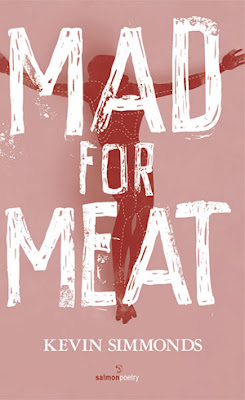
Microreview: Kevin Simmonds' "Mad for Meat"


In Kevin Simmonds' first book Mad for Meat, you can't help but feel the jumpy lineation of Sonia Sanchez and the condensed linguistic play of someone like Kay Ryan or Thylias Moss, especially in her earlier work like Small Congregations.  There's a healthy self-contentment in Simmonds' poetry which is missing from many of his peers' work.  Simmonds doesn't try to capitalize on phony urgency.

He is largely a talented poet of reminiscence, and it doesn't feel like its in any way a default position.  In poem after poem, he transports himself (and us) to intriguing places, like hearing Leontyne Price on TV ("the black fan of your voice/on primetime/Turbaned goddess of my Zenith/the way God struck your soprano..."); Emmett Till ("a mansion of a boy whose rooms we must fill"); Dolly Parton ("How did you know it was love enough/for a cinched waist and a blond wig/an alter of pentecostal breasts/and their rising hallelujah...).  His language is almost invariably fun and alive.

A few of the personae prose poems don't measure up to the rest of the book.  It feels occasionally like Simmonds doesn't know what he wants to say about them, or allow them say about themselves--he offers a series of facts that could be gleaned from a fine history book.  For example, in his poem "Bayard Rustin," Simmonds has Rustin present the obvious biographical facts ("The Movement.  That's what I work for.  The March on Washington for Jobs and Freedom.  It's going to make an impact.")  Which would be fine if it didn't  take him almost three paragraphs to arrive to the poetry: "Homosexual.  Such an antiseptic sound to it.  Yet I rather that to other names, names I'm called between my teeth."

This is a very minor flaw in a wonderful book full of tenacious "sequined despair" and the self-confidence that teaches us to "wait out the truth" through the protracted retelling of old stories.

Kevin Simmonds' Mad for Meat is available through Salmon Poetry.

Wednesday, January 25, 2012

Microreview: On "Nocturnal Omissions" by Gavin Geoffrey Dillard and Eric Norris


There's something inherently weak in a critic who refers to something as a "guilty pleasure."  You can't help but imagine what pressures are weighing on them to feel they have to qualify their liking in such a guarded way.  With Nocturnal Omissions: A Tale of Two Poets, Eric Norris and one-time porn star Gavin Geoffrey Dillard, have written a pseudo-autobiographical epistolary novel-in-verse comprised of frenetic, bawdy emails written during a two month period.  Why feel guilty liking it?

The book begins with the poem "La Fin de Temps" in which Dillard boldly declares his intentions: "I want to supplant your blood with my sperm and/plant a garden of teeth upon island and crest."  The next page features a response poem by Norris called "The Day of the Apocalypse."  Here's a sample: "I creep forward like the Earl of Gloucester in King Lear, smelling my way to Dover.".  And then Galvin's reply appears as the next poem "Petit Dejeuner au Lit."  One of the lines asks "...will a hot stream of piss be mine and a fleshy scone of rubicund jam?"

Nocturnal Omissions might be one of the more intriguing books of 2011.  Not quite camp, not quite comedy, it feels (sort of) like an extended in-joke-- except one that you do weirdly want to part of. Sometimes the experience is like watching a really amazing high-school variety show; it's sloppy, and you spend a lot of time simply admiring their gusto, waitng for them to stumble into the next fun bit. Sometimes it can take a bit too long to come, but you know it will.  This book is even as overlong as most of those shows-- as it should be-- part of the fun is their refusal, conscious or not, to conform through compression.  They feel entitled to their space and their excess, the thought of acquiescing to someone else's rules doesn't even seem to occur to them.  It's 165 pages, and you get the sense they wouldn't mind if you didn't go straight from beginning to end.  Go ahead and wander around.  Do what you want.

The pronouncements of love and lust ("But you, precious halfling, when you grin and dance before me, even the possums mumble how tasty you might be in a pie or stew") makes the humor endearing in an uncommon way.  You get the sense they're writing parody, or self-parody, or something reminiscent of an idea of parody, but you're not quite sure.  The call-and-response poems document the minutiae of gay life ("I wore a wife-beater out in public today, for the first time in some years--the diet has worked"), possibly sincere philosophy ("Love is a misnomer, for it implies duality, purports two disparate parts intertwined"), and critiques of well-known contemporary poets ("I do like dogs.  I detest Mark Doty.")..along with other things ("This week I had implanted my first bionic tooth--a titanium screw into my lower mandible; I have felt no pain...).

When you read lines like "Don't think me cynical if I find love incredible," you can't help but read this as a warning to the critic.  in fact, the book transforms itself into something critic-proof.  When they reference Sappho, Housman ("the best"), and Shakespeare, you don't feel the allusion are a nod to the audience, an insistence for approval, like the kind of poem the University of Chicago press goes ga-ga for.  It's thrown into the poem because they felt like throwing it in; they like books because they do, not because they should.

As Bryan Borland's still new Sibling Rivalry Press (already highly regarded) continues to take off, you can't help but hope he doesn't begin to only publish more mainstream authors, like the precocious Saeed Jones and the established Matthew Hittinger, but also takes in what ultimately be the more unexpected projects from people who don't seem to have MFAs or the most embarrassing sort of Ph.D. (yes, you can still purchase one in creative writing if your multiple-choice skills are intact.)  Flawed and wholly undisciplined as it may be, perhaps an integral part of its strength, the unstoppable joy of writing surfaces in Noctural Omissions, which is perhaps the most radical act of all.

Gavin Dillard's and Eric Norris' Nocturnal Omissions: A Tale of Two Poets is available through Sibling Rivalry Press.